


Rhaina Cohen
Rhaina Cohen is a producer and editor for Embedded, NPR's home for documentary storytelling. She's developed, produced, and edited acclaimed narrative podcast series on a wide range of issues, from abortion access to the aftermath of gun violence.
She was previously a producer and editor for the seasonal narrative shows Invisibilia, Rough Translation, and Louder Than A Riot. For years, she covered the social sciences as a producer for Hidden Brain. Cohen joined NPR as an intern for Planet Money.
She's also the author of the national bestseller, The Other Significant Others: Reimagining Life with Friendship at the Center. In 2024, Cohen gave a TED talk about the overlooked potential of friendship. She's written about the topic for The Atlantic, The New York Times, The Washington Post, and TIME.
Cohen's work has been honored by numerous awards, including a National Headliner Award and an Edward R. Murrow Award, and she's received grants from the National Endowment for the Humanities Public Scholars Program and The Greater Good Science Center. Cohen was a Marshall Scholar at the University of Oxford, where she earned a master's in comparative social policy. She holds a bachelor's degree in American Studies from Northwestern University.
-
 Buying a home is a conventional milestone for couples. But as home prices skyrocket, many Americans are buying homes with someone who isn't their romantic partner.
 -
In the latest story in the NPR's series The Science of Siblings, we hear about a practice that dates back to ancient times that allows people to turn a friend into a sibling.
-
 The demand for "proper" English can be used to shut people out of spaces and opportunities. The folks at NPR's "Rough Translation" podcast have a story to tell.
 -
Companies flush with cash are choosing to use some of that money to buy back their own stock shares, instead of investing in new products or raises for employees. So, is this a good trend?
-
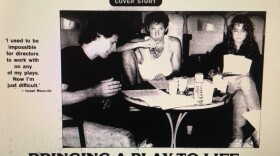 Decades ago, a group of women accused a prominent playwright of sexual misconduct. For the most part, the complaints went nowhere. In 2017, more women came forward. This time, people listened.
 -
 Violent crimes committed by Muslims are much more likely to be reported as "terrorism." And that has disturbing consequences for the way Muslims are perceived.
 -
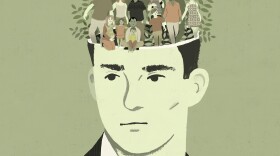 A culture of racism can infect us all. On this week's radio show, we discuss the implicit biases we carry that have been forged by the society around us.
 -
 Pundits and prognosticators make predictions all the time: about everything from elections, to sports, to global affairs. This week, we explore why they're often wrong, and how we can all do better.
 -
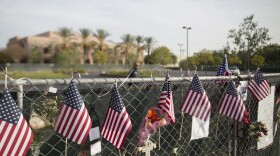 In the last five years, 12 percent of terrorist attacks in the U.S. were carried out by Muslims and more than 50 percent by far right extremists. So why the media focus on "Islamic terrorism"?
 -
 Many Americans are increasingly expressing their political beliefs with their wallets. Neeru Paharia explains how we use money to tell stories about ourselves, and to ourselves.


